Govt. of Karnataka · Muzrai Dept.
English | ಕನ್ನಡ
Login Donate
ಇತಿಹಾಸ · History & Heritage

About the Temple

Eight centuries of devotion on Chamundi Hill — the story of Sri Chamundeshwari Temple, one of Karnataka's most sacred shrines.

Home About
12th Century · Hoysala Era

A Millennium of Sacred Faith

The origins of the Chamundeshwari Temple are traced to the 12th century CE during the Hoysala Empire, though the hill's sanctity predates even that era. The goddess is mentioned in ancient texts as the presiding deity of the Mysore region long before the formal construction of the temple.

The Wadiyar dynasty of Mysore, who adopted Chamundeshwari as their kula devata (clan deity), made numerous additions and renovations to the temple complex over the centuries. The majestic seven-storey gopuram that graces the skyline today was constructed in the early 20th century and remains one of the most photographed structures in Karnataka.

The hill itself — rising to 1,062 metres above sea level — is not merely a geographic feature but a living sacred landscape, its name a direct invocation of the goddess herself.
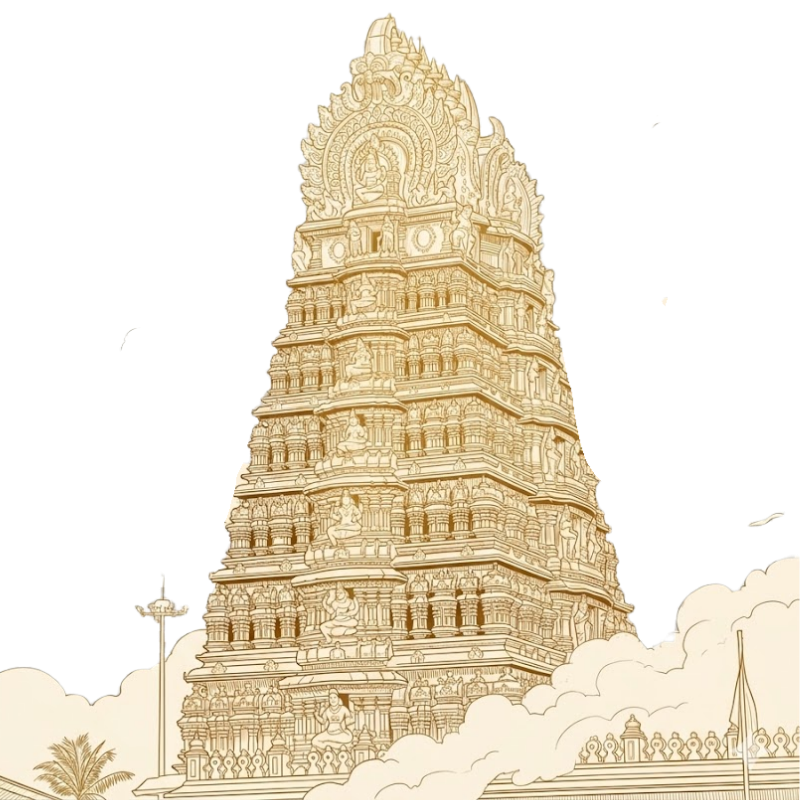
Temple Gopuram
The Sacred Gopuram

Seven-storey Dravidian gopuram · Early 20th century construction · Visible from across Mysuru city

12th
Century Origin
7
Storey Gopuram
1K
Steps up the Hill
18
Mahā Shakti Peethas
Goddess Chamundeshwari
ದೇವಿಯ ಕಥೆ · The Goddess

Sri Chamundeshwari

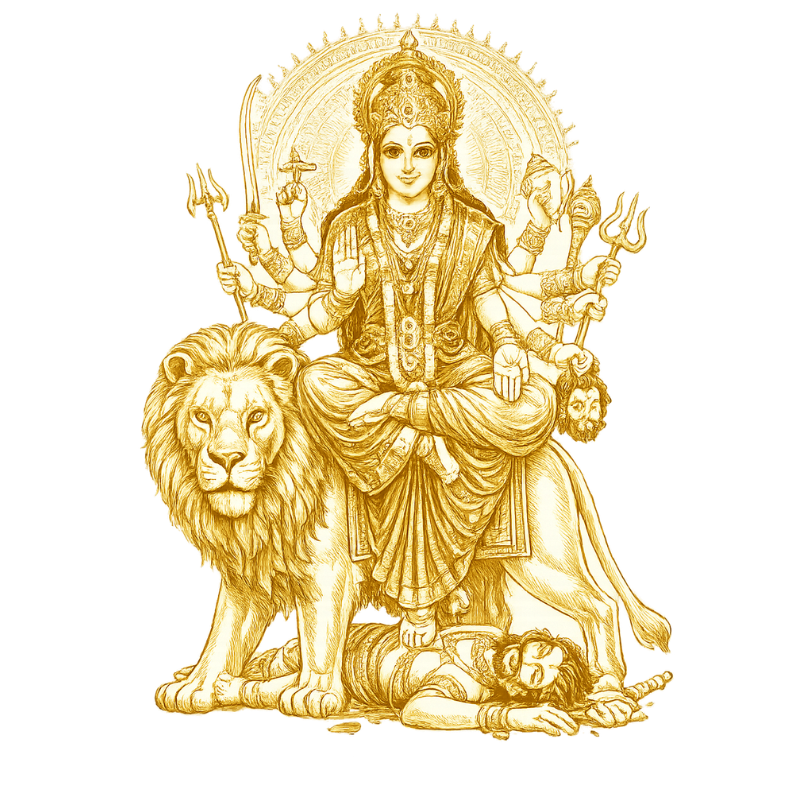
A fierce, luminous form of Adi Shakti, Sri Chamundeshwari is the slayer of the demon generals Chanda and Munda — from whose names her own is derived. Depicted with 18 arms bearing divine weapons, she is seated upon a lion, the universal symbol of courage and righteousness.

The inner sanctum enshrines the goddess in golden Kavacha armour, with the sacred Mahisha idol at her feet — an eternal testament to the triumph of good over evil.

"ಯಾ ದೇವಿ ಸರ್ವಭೂತೇಷು ಶಕ್ತಿರೂಪೇಣ ಸಂಸ್ಥಿತಾ"

She who dwells in all beings as Shakti — Devi Mahatmyam
ವಾಸ್ತುಶಿಲ್ಪ · Architecture

Dravidian Splendour

Dravidian Gopuram

The seven-storey tower rises over 40 feet, decorated with intricate stucco sculptures of deities, celestial beings, and mythological scenes. Built in the early 1900s, it was renovated with Raja Rajeshwari gold paintings in the 1970s.

Inner Sanctum

The garbhagriha (sanctum sanctorum) houses the principal idol of Chamundeshwari in golden Kavacha armour. A sacred Mahisha (buffalo) idol at the goddess's feet symbolises her eternal victory over the demon.

The Nandi

A monolithic Nandi bull, carved from a single boulder in 1659 CE by Dodda Devaraja Wadiyar, stands on the hillside road. Standing 15 feet tall and 24 feet long, it is one of the largest monolithic Nandis in India.

ದೇಗುಲ ಸಮೂಹ · 19 Temples

Group of Sacred Temples

The Sri Chamundeshwari Development Authority manages 19 historic temples across Mysuru district, preserving centuries of sacred heritage.

Sri Chamundeshwari
Temple

Main shrine on Chamundi Hill — kula devata of the Mysuru Maharajas.

↗ Directions

Mahishasura
Statue

Iconic 15-ft statue of the buffalo demon slain by the Goddess.

↗ Directions

Nandi
Statue

Massive monolithic Nandi carved in 1659 on the hill road.

↗ Directions

Vinayaka Temple
(Western Gate)

Ancient Ganesha shrine at the historic western gate of Mysuru Palace.

↗ Directions

Kodi
Someshwaraswami

Lord Shiva temple near the Kodi tank of the Palace Fort.

↗ Directions

Kille Venkataramana
Swami

Majestic temple within the fort walls — a symbol of royal devotion.

↗ Directions